Top 10 Email Marketing Platforms for Maximum ROI
May 30, 2026
10 Best Mass Email Marketing Services to Grow Your Business
June 18, 2026
What if the biggest growth opportunity for your business is already sitting in your customers’ inboxes? Despite the rapid rise of AI, social media platforms, and short-form video content, email continues to deliver one of the highest returns on investment in digital marketing. Yet success today requires more than simply sending promotional messages. Consumers expect personalized experiences, relevant content, and seamless interactions that add real value to their lives.
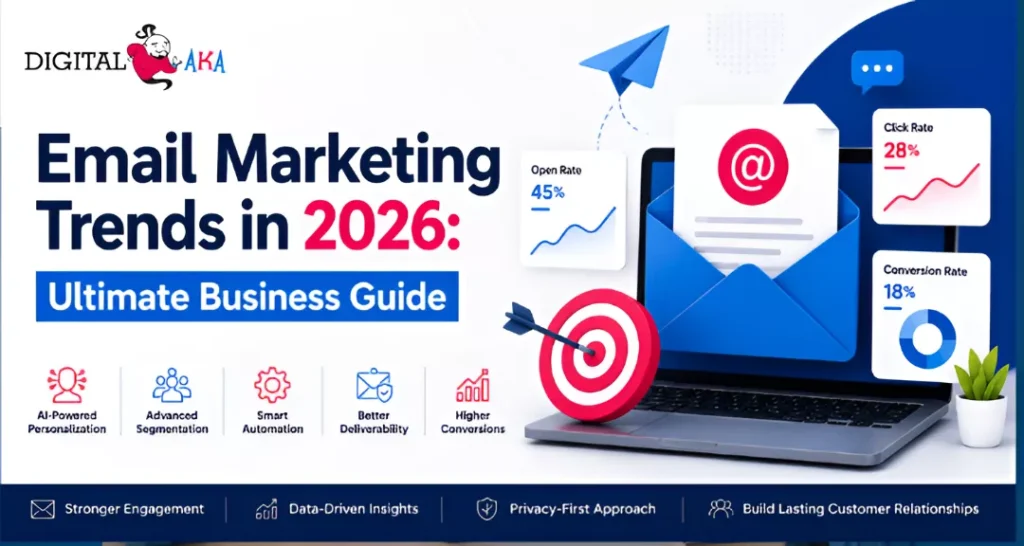
As inbox competition intensifies, businesses that fail to adapt risk lower engagement, declining open rates, and missed revenue opportunities. This makes understanding the latest email marketing trends more important than ever. From AI-powered personalization and advanced automation to stronger deliverability practices and privacy-focused communication, modern email marketing is evolving rapidly. Brands that embrace these innovations are building deeper customer relationships, increasing conversions, and creating sustainable long-term growth in an increasingly competitive digital landscape.
Table of Contents
Why Email Marketing Continues to Thrive
Many marketers predicted the decline of email years ago. Yet it continues to deliver some of the highest returns among digital channels.
Several factors contribute to its ongoing success:
- Direct communication with subscribers
- Complete ownership of audience data
- High personalization capabilities
- Strong email automation opportunities
- Measurable performance metrics
- Cost-effective pricing and customer retention
As privacy regulations evolve and third-party cookies disappear, email is becoming even more valuable as a first-party data asset.
This shift has accelerated many new email marketing trends that focus on customer trust, personalization, and long-term engagement.
Top Email Marketing Trends in 2026
As customer expectations evolve, these top email marketing trends in 2026 are helping brands increase engagement, improve deliverability, and drive higher conversions.
1. AI-Powered Email Personalization Becomes Standard
One of the top email marketing trends transforming the industry is artificial intelligence-driven personalization. Traditional personalization often relied on adding a subscriber’s first name. Modern AI systems go much further.
Today’s platforms can analyze the following:
- Browsing behavior
- Purchase history
- Engagement patterns
- Preferred content types
- Device usage
- Customer lifecycle stage
This data allows marketers to create highly relevant messages tailored to individual users.
Real-World Example
An online retailer can automatically recommend products based on previous purchases and browsing behavior. Instead of sending one generic campaign, each subscriber receives unique recommendations.
Benefits include:
- Higher open rates
- Increased click-through rates
- Better conversion rates
- Improved customer loyalty
AI-powered personalization is quickly becoming one of the best email marketing trends for brands focused on maximizing ROI.
2. Hyper-Segmentation Improves Engagement
Generic email blasts continue to lose effectiveness. Successful marketers now divide audiences into highly specific segments.
Common segmentation factors include:
- Geographic location
- Purchase behavior
- Customer interests
- Industry
- Company size
- Engagement level
Hyper-segmentation allows brands to deliver more relevant messaging.
For example:
A software company might create separate campaigns for the following:
- New subscribers
- Trial users
- Existing customers
- Enterprise prospects
Each audience receives content specifically aligned with their needs.
Among all trends in email marketing, segmentation remains one of the most impactful strategies for improving campaign performance.
3. Interactive Emails Increase User Participation
Static emails are gradually being replaced by interactive experiences.
Modern email designs now include the following:
- Polls
- Surveys
- Product carousels
- Quizzes
- Image galleries
- Interactive forms
Interactive elements reduce friction by allowing users to engage without leaving the inbox.
Benefits include:
- Higher engagement rates
- Better user experience
- Increased click activity
- More customer insights
Brands using interactive content often see stronger campaign performance compared to traditional email formats.
4. Privacy-First Marketing Takes Center Stage
Consumer privacy concerns continue growing worldwide.
This has led to one of the most important latest email marketing trends: privacy-focused communication.
Businesses are now prioritizing the following:
- Explicit consent collection
- Transparent data practices
- Preference centers
- Easy unsubscribe processes
- Secure data storage
Consumers increasingly reward brands that demonstrate respect for personal information.
Trust has become a major competitive advantage in email marketing.
5. First-Party Data Becomes More Valuable
The decline of third-party tracking is changing how marketers collect and use data.
Businesses are investing heavily in first-party data strategies through:
- Newsletter signups
- Surveys
- Customer accounts
- Loyalty programs
- Interactive content
This approach improves personalization while supporting compliance requirements.
As privacy regulations expand globally, first-party data will become the foundation of successful email marketing strategies.
6. Advanced Automation Creates Better Customer Journeys
Automation has evolved far beyond simple welcome emails. Today’s systems can create sophisticated customer journeys triggered by user behavior.
Popular automated sequences include:
- Welcome Series: Introduces new subscribers to the brand.
- Abandoned Cart Emails: Recover lost sales opportunities.
- Re-Engagement Campaigns: Reconnect inactive subscribers.
- Post-Purchase Sequences: Encourage repeat purchases and customer retention.
Automation ensures timely communication while reducing manual workload. Among the new email marketing trends, intelligent automation delivers some of the highest efficiency gains.
7. Mobile-First Email Design Dominates
Most email opens now occur on mobile devices. As a result, marketers are prioritizing mobile optimization from the beginning.
Best practices include:
- Responsive layouts
- Larger fonts
- Clear call-to-action buttons
- Faster loading images
- Shorter subject lines
Poor mobile experiences can significantly reduce engagement. Mobile-first design is no longer optional. It is a necessity.
8. Email Deliverability Becomes a Strategic Priority
Sending emails is easy. Reaching inboxes is much harder. One of the fastest-growing email deliverability trends involves improving sender reputation and inbox placement.
Businesses are focusing on:
- Domain authentication
- List hygiene
- Engagement monitoring
- Spam complaint reduction
- Consistent sending practices
Strong deliverability directly impacts revenue because even the best campaigns cannot perform if subscribers never see them.
Key Deliverability Practices
- Remove inactive subscribers regularly
- Use verified domains
- Avoid spam-triggering language
- Monitor bounce rates
- Segment engaged audiences
Deliverability is becoming a critical competitive advantage in modern email marketing.
9. User-Generated Content Builds Trust
Consumers trust other consumers more than brand messaging. This reality has fueled one of the best email marketing trends: incorporating user-generated content.
Examples include:
- Customer reviews
- Testimonials
- Social media posts
- Case studies
- Product photos
Benefits include:
- Increased credibility
- Improved trust
- Higher conversion rates
- Enhanced community engagement
Authenticity consistently outperforms overly promotional content.
10. Predictive Analytics Improves Campaign Performance
Predictive analytics helps marketers anticipate future customer behavior.
AI systems can forecast:
- Purchase likelihood
- Churn risk
- Product interests
- Optimal send times
- Customer lifetime value
This enables more effective targeting and resource allocation. Companies using predictive analytics often achieve stronger campaign performance while reducing marketing waste.
11. Omnichannel Integration Creates Seamless Experiences
Email is no longer operating in isolation.
Modern marketing strategies integrate email with:
- Social media
- SMS marketing
- Paid advertising
- Customer support
- CRM systems
A connected customer experience improves engagement across all touchpoints.
For example, an abandoned cart email may be supported by retargeting ads and SMS reminders. This coordinated approach strengthens overall campaign effectiveness.
12. Value-Driven Content Outperforms Promotional Messaging
Consumers are increasingly selective about the emails they open. Brands achieving strong engagement focus on delivering genuine value.
Popular content formats include:
- Educational guides
- Industry insights
- Expert interviews
- Case studies
- Product tutorials
- Research findings
Rather than constantly selling, successful marketers prioritize helping subscribers solve problems. This strategy strengthens trust and long-term customer relationships.
DigitalAka™: Helping Brands Modernize Email Marketing
As email marketing continues evolving, many businesses struggle to keep pace with changing technologies, customer expectations, and deliverability requirements. This is where DigitalAka™ helps brands achieve measurable growth through strategic email marketing solutions.
Businesses looking to improve engagement, nurture leads, and maximize customer retention can benefit from the expertise available through DigitalAka™.
Core Email Marketing Services
DigitalAka™ supports businesses through the following:
- Email marketing strategy development
- Campaign planning and execution
- Email Marketing automation setup
- Audience segmentation
- Deliverability optimization
- Lead nurturing workflows
- Performance analysis and reporting
- Conversion-focused email design
Why Businesses Choose DigitalAka™
The company focuses on creating email campaigns that balance personalization, automation, and customer experience.
Key advantages include the following:
- Data-driven decision making
- Customized email marketing services
- Improved subscriber engagement
- Better inbox placement
- Higher conversion opportunities
- Scalable automation systems
- Continuous campaign optimization
Business Impact
Rather than relying on one-size-fits-all templates, DigitalAka™ develops tailored email programs aligned with specific business goals.
Whether a company wants to generate leads, increase sales, improve retention, or strengthen customer relationships, strategic email marketing can become a significant growth driver.
For organizations navigating the latest email marketing trends, partnering with experienced specialists helps reduce trial and error while accelerating results.
How to Prepare Your Email Strategy for the Future
Businesses should focus on several priorities moving forward:
- Invest in Data Quality: Clean, accurate customer data supports personalization and automation.
- Prioritize Deliverability: Inbox placement directly influences campaign success.
- Embrace AI Responsibly: Use AI to enhance customer experiences rather than replace human creativity.
- Focus on Customer Value: Every email should provide a clear benefit to subscribers.
- Continuously Test and Optimize: Successful email marketing requires ongoing experimentation and improvement.
Companies that adapt quickly will gain a significant advantage as new email marketing trends continue emerging.
Conclusion
The future of email marketing is being shaped by innovation, personalization, and customer-centric communication. As the latest email marketing trends continue to evolve, businesses must adapt to changing consumer expectations, embrace AI-driven automation, strengthen email deliverability trends, and implement data-driven email marketing strategies. The best email marketing trends in 2026 focus on delivering relevant experiences, building trust, and creating meaningful customer relationships that drive long-term growth. From hyper-segmentation to predictive analytics, these new email marketing trends offer powerful opportunities to improve engagement and conversions.
Staying ahead of the top email marketing trends is no longer optional but essential for maintaining a competitive edge. Ready to transform your email performance? Partner with DigitalAka™ to leverage cutting-edge strategies, maximize ROI, and turn every email into a valuable business growth opportunity.
FAQs
The most significant email marketing trends include AI-powered personalization, advanced automation, hyper-segmentation, improved deliverability practices, interactive emails, and privacy-first marketing.
Email marketing provides direct access to subscribers, supports personalized communication, delivers measurable results, and offers one of the highest returns on marketing investment.
Businesses can improve deliverability by maintaining clean email lists, authenticating domains, monitoring engagement metrics, reducing spam complaints, and following sender best practices.
AI helps marketers personalize content, predict customer behavior, optimize send times, automate workflows, and improve campaign performance through data analysis.
Segmentation enables businesses to send highly relevant content to specific audience groups, resulting in higher engagement, better conversions, and stronger customer relationships.
The latest email marketing trends include AI personalization, predictive analytics, and interactive emails, all of which DigitalAka™ helps businesses implement effectively.
The best email marketing trends for engagement include segmentation, automation, and personalized content, strategies that DigitalAka™ uses to boost results.
Email deliverability trends improve inbox placement and open rates, and DigitalAka™ helps businesses optimize deliverability for better campaign success.
New email marketing trends such as AI-driven recommendations, hyper-segmentation, and omnichannel marketing are key areas of focus for DigitalAka™.
Strong email marketing strategies help businesses maximize trends in email marketing, and DigitalAka™ provides expert guidance to achieve higher ROI.