
Email Marketing vs. Social Media Marketing: Which Works Better?
August 21, 2025
10 Powerful Ways to Improve and Protect Your Sender Reputation
October 14, 2025Have you ever sent an important email and later found it sitting in the spam folder? This is one of the biggest challenges businesses face today, and the reason behind it is the rise of AI-driven spam filters. In the past, spam filters worked on simple rules like checking for certain words or too many links. But now, email providers are using Artificial Intelligence (AI) to scan emails in smarter ways. These advanced filters not only check the content but also study user behavior, engagement, and sender reputation before deciding if your email reaches the inbox or spam.

For companies that use SMTP Server Services or depend on bulk email services to send campaigns, this change is very important. AI-driven spam filters have made email delivery stricter, which means your content must be more genuine, personalized, and relevant. Even small mistakes like poor subject lines, bad email lists, or lack of authentication can reduce deliverability.
In this blog, we will explore how AI-driven spam filters are reshaping SMTP deliverability, why they matter for businesses, and what you can do to ensure your emails still reach the right audience.
Table of Contents
What Are AI-Driven Spam Filters?
AI-driven spam filters are smart tools that email providers use to stop unwanted or harmful emails. Unlike traditional spam filters that only looked for fixed patterns like certain words, too many links, or suspicious attachments, AI-driven filters use Artificial Intelligence (AI) and Machine Learning (ML) to work in a smarter way.
These filters study huge amounts of data and learn from user behavior. For example, if many people mark a certain type of email as spam, the AI filter quickly identifies similar emails and blocks them. They don’t just check the content but also track sender reputation, email structure, subject lines, and even how people interact with emails (like opening, reading, or deleting them).
The benefit of AI-driven spam filters is that they can adapt in real time. Spammers change their tricks often, but AI learns and updates itself continuously. This makes inboxes safer and more reliable.
For businesses using SMTP server services or bulk email services, it means they need to follow best practices. Sending quality, relevant, and authenticated emails is now more important than ever to make sure emails reach the inbox and not the spam folder.
Read More- Email Marketing vs. Social Media Marketing: Which Works Better?
Difference between old spam filters and AI spam filters
Spam filters are important because they stop unwanted emails from reaching your inbox. Earlier, spam filters worked on fixed rules. For example, if an email had too many capital letters, suspicious links, or certain words like “Free” or “Win,” it was marked as spam. While this helped block some spam, it also caused many genuine emails to land in spam. These traditional filters were easy for spammers to trick by simply changing words or formats.
Today, things have changed with the arrival of AI-driven spam filters. These filters don’t just follow rules, they learn from patterns. Using machine learning and big data, AI spam filters analyze how people interact with emails. They check sender reputation, user engagement (like open rates and clicks), and even behavior over time. This makes them more accurate, harder to cheat, and smarter in protecting users.
Here’s a simple comparison:
| Feature | Old Spam Filters (Rule-Based) | AI Spam Filters (Modern) |
| Working style | Fixed rules and keywords | Machine learning and real-time learning |
| Accuracy | Often low, many false positives | High accuracy with fewer mistakes |
| Adaptability | Easy for spammers to bypass | Adapts quickly to new spam tactics |
| Factors considered | Content only | Content, reputation, engagement, trends |
Read More- Privacy-First Email Campaigns- Rules and Protect Emails with SMTP
How Do AI Spam Filters Work?
AI-driven spam filters are smarter than old spam filters because they use machine learning and data analysis to study email patterns. Here’s how they work:
1. Content Analysis
- AI spam filters carefully read the subject line, body text, links, and attachments.
- They look for spammy words, misleading offers, or unsafe links.
- If the email has too many suspicious elements, it may land in the spam folder.
2. Sender Reputation Check
- AI systems track the reputation of the sender’s SMTP server and domain.
- If the sender has a history of sending bulk spam emails, their future emails are blocked.
- Using proper authentication (SPF, DKIM, DMARC) helps improve trust.
3. User Engagement Signals
- AI notices how people react to your emails.
- If users open, click, and reply, your emails are marked safe.
- If users ignore or mark as spam, filters reduce your email’s chances of reaching the inbox.
4. Real-Time Learning
- AI spam filters never stop learning.
- They keep updating themselves with new spam tricks and phishing attempts.
- This makes them stronger and harder to bypass.
5. Personalization and Relevance
- AI filters give more importance to personalized and useful emails.
- Generic bulk emails are often filtered, while relevant and targeted messages perform better.
6. Behavior-Based Detection
- AI checks unusual behavior like sending too many emails at once.
- Sudden spikes in bulk email sending may trigger spam alerts.
AI-driven spam filters Impact on SMTP Deliverability
Most businesses depend on SMTP server services and bulk email services to reach their customers. But with the rise of AI-driven spam filters, sending emails is no longer as simple as before. These smart filters deeply check every email, and this has a big impact on SMTP deliverability. Let’s understand how:
1. Stricter Content Checks- AI spam filters scan subject lines, links, attachments, and even writing style. If your email looks like spam, it may never reach the inbox.
2. Focus on Engagement- Filters now study how people interact with your emails. If users open, click, or reply, your future emails are trusted. If not, they may land in spam.
3. Sender Reputation Matters- AI systems track your domain and IP reputation. If too many people mark your emails as spam, your SMTP server may be blocked.
4. List Hygiene is Important- Sending emails to inactive or fake addresses signals bad practices. AI detects this and reduces your deliverability rate.
5. Authentication is a Must- Without SPF, DKIM, and DMARC, emails may look suspicious. AI filters give priority to verified senders.
6. Personalization Improves Deliverability- Generic bulk emails are often flagged. AI filters prefer personalized content that matches user interests.
7. Real-Time Adaptation- Unlike old filters, AI systems keep learning. What works today may not work tomorrow, so businesses must stay updated.
8. Impact on Bulk Email Services– Mass sending is risky if not done properly. AI filters can block bulk campaigns if they lack quality or relevance.
Read More- 13 Reasons why your Emails Landing in Spam and How to Stop It
Best Practices to Improve Deliverability
If you want your emails to reach the inbox and not the spam folder, you need to follow some smart practices. Here are the top tips to make sure your emails reach the inbox:
1. Use a Trusted SMTP Server Service
Always send emails through a reliable SMTP server service or bulk email service. It ensures your emails are sent with proper authentication and reduces the chances of being flagged as spam.
2. Authenticate Your Emails
Set up SPF, DKIM, and DMARC records. These are like ID checks for your emails and prove to email providers that your messages are safe and genuine.
3. Keep Your Email List Clean
Regularly remove inactive, fake, or bounced email addresses. A clean list means fewer spam complaints and better deliverability.
4. Avoid Spammy Subject Lines
Don’t use too many capital letters, symbols, or misleading words like “Free!!!” or “Urgent!!!”. Keep subject lines clear, honest, and engaging.
5. Personalize Your Content
AI-driven spam filters check if emails are relevant. Add the person’s name and share content that fits what they like.
6. Monitor Engagement
Email providers look at open rates, clicks, and complaints. Send useful content that encourages readers to engage with your emails.
7. Send Consistently, Not Excessively
Maintain a regular sending schedule. Sudden spikes in bulk emails can look suspicious and trigger filters.
8. Test Before Sending
Always test your emails for spam triggers and check how they appear on different devices before sending them to your list.
9. Provide Easy Unsubscribe Options
Make it simple for users to unsubscribe. If people can’t opt out easily, they may mark your email as spam.
10. Monitor Your Reputation
Keep track of your sender reputation score. A poor reputation directly affects deliverability.
Read More- 20 Email Marketing Mistakes That Are Killing Your Campaigns
5 Top Trusted SMTP Server Service Providers
If you want your emails to reach the inbox safely and quickly, choosing a trusted SMTP server service provider is very important. A reliable provider helps with email deliverability, bulk sending, and security. Here are the top 5 trusted SMTP service providers you can count on:
1. DigitalAka
DigitalAka is another trusted SMTP server service provider that helps businesses send emails smoothly and securely. It provides quick bulk email sending, better inbox reach, and easy setup for both new users and experts. With DigitalAka, companies can manage their email campaigns without worrying about spam issues or technical challenges.
One of the key benefits of DigitalAka is its focus on deliverability and reliability. It uses advanced tools to make sure emails reach the right inbox at the right time. The service also provides detailed reports so users can track opens, clicks, and performance easily.
DigitalAka is a great choice for startups, eCommerce stores, and marketing teams looking for affordable and effective SMTP server services. By using its bulk email services, businesses can grow faster, connect better with customers, and improve their overall email marketing results.
Features Provided by DigitalAka:
Here’s a list of features provided by DigitalAka:
- High Deliverability: Helps your emails land in the inbox, not in the spam folder.
- Bulk Email Sending: Supports large-scale campaigns for businesses of all sizes.
- Easy Integration: Simple setup with websites, apps, or CRMs using SMTP or API.
- Detailed Analytics: Track email opens, clicks, bounces, and complaints in real-time.
- List Management: Manage subscribers easily with tools to clean and segment lists.
- Secure Sending: Protects data with authentication methods like SPF, DKIM, and SSL.
- Affordable Pricing: Offers cost-effective plans suitable for startups and enterprises.
- 24/7 Support: Provides customer support to solve technical issues quickly.
- Scalability: Grows with your business, from small campaigns to millions of emails.
- Custom Dashboard: User-friendly panel to monitor and control all email campaigns.
2. SendGrid
SendGrid is one of the most trusted names when it comes to SMTP server services. It is widely used by businesses that send a large number of emails every day. The main reason behind its popularity is high deliverability, meaning your emails are more likely to land in the inbox instead of spam.
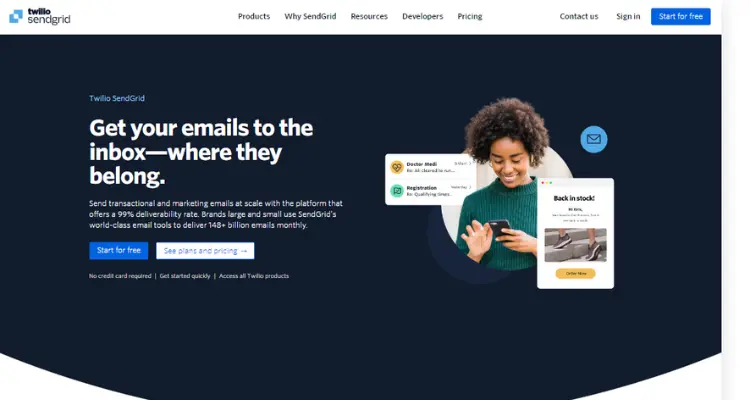
SendGrid offers both transactional emails (like password resets, order confirmations) and marketing emails (like newsletters, promotions). It comes with a powerful API that allows developers to easily connect it with websites, apps, or eCommerce platforms.
One of its best features is detailed reporting. You can track how many emails were delivered, opened, or clicked, which helps improve your campaigns. SendGrid also provides built-in email templates, so even beginners can design professional emails without coding.
Security is another strong point. SendGrid uses SPF, DKIM, and DMARC to keep your emails safe and protect your domain’s reputation. This ensures your bulk email services run smoothly without being marked as spam.
Features provided by SendGrid:
Here are the key features provided by SendGrid:
- High Email Deliverability: Ensures emails reach the inbox instead of the spam folder.
- Transactional & Marketing Emails: Supports both types, like order updates and promotions.
- Powerful API Integration: Easy to connect with websites, apps, and eCommerce platforms.
- Email Templates: Ready-to-use, customizable templates for professional-looking emails.
- Detailed Analytics: Track delivery, open rates, clicks, and bounce rates.
- Scalable Sending: Send from a few emails to millions without issues.
- Email Testing Tools: Test emails before sending to check content and design.
3. SMTPmart
SMTPmart is a trusted SMTP server service provider that helps businesses send bulk emails with high deliverability. It is designed for companies that want to send large volumes of emails quickly and safely without getting blocked. With SMTPmart, you can manage both marketing and transactional emails in one place.
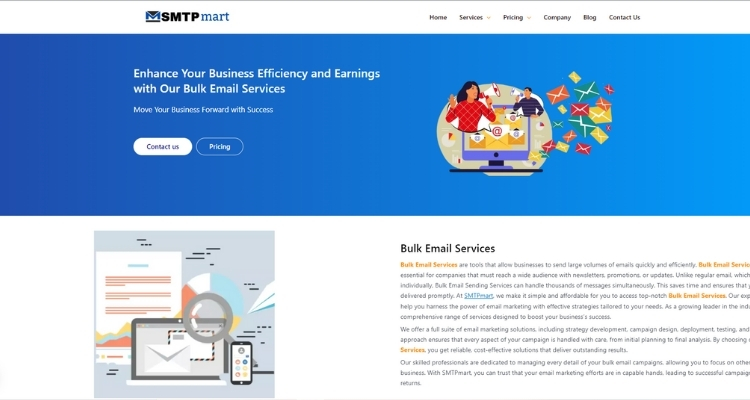
The platform provides advanced features like real-time tracking, detailed reports, and strong security to protect your email campaigns. It also supports popular email authentication methods such as SPF, DKIM, and DMARC, which improve your sender reputation and reduce the chances of landing in spam.
SMTPmart is known for its easy setup, affordable pricing, and 24/7 support, making it a great choice for startups, eCommerce stores, and growing businesses. Whether you need to send newsletters, promotions, or notifications, SMTPmart ensures smooth and reliable email delivery every time.
Features Provided by SMTPmart
Here are some key features Provided by SMTPmart:
- High Deliverability: Helps your emails reach the inbox instead of going to spam.
- Bulk Email Sending: Send thousands of emails at once without server issues.
- Email Authentication: Supports SPF, DKIM, and DMARC for better sender reputation.
- Real-Time Tracking: Monitor email opens, clicks, bounces, and complaints instantly.
- Secure SMTP Servers: Protects your data and emails with advanced security measures.
- Easy Integration: Works smoothly with CRMs, CMS, and other marketing tools.
- Detailed Reports: Get insights into delivery rates, engagement, and performance.
- Scalable Plans: Flexible pricing and plans for startups, eCommerce, and enterprises.
- 24/7 Customer Support: Round-the-clock help for technical and setup issues.
- User-Friendly Dashboard: Simple interface to manage and control campaigns easily.
4. Mailgun
Mailgun is a reliable SMTP server provider, built for developers and businesses that need strong and effective email services. You can send bulk emails, transactional emails, and marketing campaigns with strong delivery rates. One of its biggest strengths is its advanced API support, which makes it easy to integrate with websites, apps, or software.
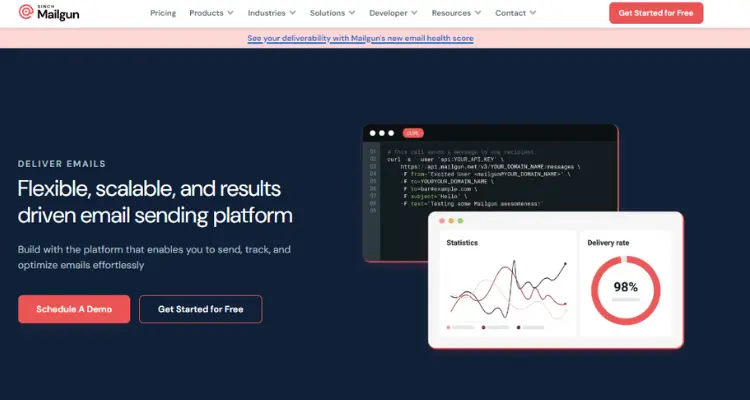
Mailgun also provides email verification tools to check if an email address is valid before sending. This reduces bounce rates and improves sender reputation. Along with this, you get detailed analytics to track how your emails are performing, such as open rates, clicks, and delivery reports.
For businesses that want more control and customization, Mailgun is a strong choice. It ensures that your emails are delivered fast, securely, and to the right inbox. Whether you are a startup or a large company, Mailgun helps you manage and grow your email communication effectively.
Features Provided by Mailgun
Here are some key features provided by Mailgun:
- SMTP Relay & API Support: Send bulk, transactional, and marketing emails using powerful APIs or SMTP relay.
- High Deliverability: Ensures your emails reach the inbox with advanced filtering and routing.
- Email Verification: Check and validate email addresses to reduce bounces and improve sender reputation.
- Detailed Analytics: Track email performance with reports on delivery, opens, clicks, and engagement.
- Scalable Sending: Send thousands or even millions of emails daily with reliable infrastructure.
- Advanced Routing: Automatically route emails to the right destination with flexible rules.
- Bounce Handling: Automatically manages bounced emails to keep your email lists clean.
- Security Features: Includes email authentication (SPF, DKIM, DMARC) and TLS encryption for safe delivery.
5. iDealSMTP
iDealSMTP is another trusted name in SMTP server services. It helps you send bulk emails, transactional messages, and marketing campaigns with good delivery rates. With its simple setup, even beginners can start sending campaigns without technical issues. iDealSMTP offers strong security, high inbox delivery rates, and real-time tracking so you can monitor how your emails perform.
One of its best features is scalability, whether you are a startup or a growing company, iDealSMTP can handle both small and large volumes of emails with ease. It also supports important tools like SPF, DKIM, and DMARC authentication, which improve sender reputation and reduce the chances of landing in spam.
For companies looking for affordable and effective bulk email services, iDealSMTP provides a smart solution. It helps businesses build stronger communication with customers while keeping emails secure, fast, and professional.
Features Provided by iDealSMTP
Here are the main features provided by iDealSMTP:
- High Email Deliverability: Ensures emails land in inbox and not in spam.
- Bulk Email Sending: Send thousands of emails at once without delays.
- Easy Setup: Simple integration with websites, apps, and CRMs.
- Strong Security: Supports SPF, DKIM, and DMARC to protect sender reputation.
- Scalable Service: Works for both small startups and large businesses.
- Real-Time Tracking: Check delivery, open rates, and click reports instantly.
- 24/7 Support: It helps you send bulk emails, transactional messages, and marketing campaigns with good delivery rates.
- Affordable Pricing: Cost-effective plans for bulk email campaigns.
- Reliable Uptime: Stable servers for uninterrupted email delivery.
- User-Friendly Dashboard: Easy to manage campaigns, contacts, and reports.
Conclusion
AI-driven spam filters are changing how SMTP deliverability works. In the past, emails were checked only for certain keywords or formats, but now AI looks at many signals like sender reputation, user engagement, and email quality. This means businesses using SMTP server services or bulk email services must be more careful than ever. Poor subject lines, unverified domains, or low-quality content can easily push emails into spam.
However, this change is not just a challenge, it is also an opportunity. AI spam filters push senders to focus on genuine, personalized, and useful communication. By following best practices like using proper authentication (SPF, DKIM, DMARC), keeping lists clean, and sending relevant content, businesses can improve trust and inbox placement.
FAQ
1. What are AI-driven spam filters?
AI-driven spam filters use artificial intelligence to check emails for spam, fraud, or low-quality content.
2. How are AI spam filters different from traditional filters?
Old filters worked on fixed rules, while AI filters learn and adapt from user behavior and data.
3. Why do AI spam filters matter for SMTP deliverability?
They decide if your email goes to the inbox or spam, directly affecting deliverability.
4. What is SMTP deliverability?
It means how successfully emails sent through an SMTP server reach the inbox.
5. Can AI spam filters block genuine emails?
Yes, if your email looks suspicious, unverified, or has poor content, it may be marked as spam.
6. What do AI filters check in an email?
They check subject lines, links, attachments, sender reputation, and user engagement.
7. How does sender reputation affect deliverability?
If many users mark your emails as spam, your reputation drops, and filters block more emails.
8. Do bulk email services get affected by AI filters?
Yes, bulk emails need to be authentic and well-targeted to pass AI checks.
9. Can email authentication improve deliverability?
Yes, using SPF, DKIM, and DMARC makes emails look trusted to AI filters.
10. Do spammy subject lines reduce deliverability?
Yes, words like “FREE!!!” or “100% Guarantee” can trigger spam filters.
11. Why is engagement important for AI spam filters?
If people open, read, and click your emails, AI sees them as valuable and safe.
12. How can businesses adapt to AI spam filters?
By sending clean, personalized, and relevant emails with verified domains.
13. Do AI filters impact small businesses?
Yes, they impact everyone, but following best practices helps small businesses too.
14. Can testing emails before sending help deliverability?
Yes, testing shows if your email is likely to land in inbox or spam.
15. Are AI spam filters good or bad for email marketing?
They are good because they force businesses to send better, more genuine emails.