
10 Best Bulk Email Marketing Services for B2B Companies
April 17, 2026
10 Best SMTP Server Providers in USA for Business Growth
April 28, 2026From startups to enterprise brands, businesses rely on bulk email campaigns, transactional emails, and automated communication to engage users, generate leads, and drive conversions. However, with this power comes responsibility, especially when it comes to CAN-SPAM Compliance. The CAN-SPAM Act (Controlling the Assault of Non-Solicited Pornography and Marketing Act of 2003) sets strict rules for commercial emails in the United States and applies to businesses worldwide targeting U.S. audiences.
Failure to follow CAN-SPAM compliance guidelines can lead to severe penalties, damaged brand reputation, and poor email deliverability. In fact, each violation can result in fines exceeding $50,000 per email, making compliance not just important, but critical. This is where SMTP providers CAN-SPAM compliance solutions play a key role. A reliable SMTP server provider does more than just send emails, it ensures that your entire email infrastructure aligns with SMTP server compliance, legal standards, and best practices.
In this blog, we will explore:
- What CAN-SPAM compliance is
- Key rules businesses must follow
- How SMTP providers ensure email compliance
- Best practices for bulk email CAN-SPAM rules
- Why choosing the right SMTP provider matters
Table of Contents
What is CAN-SPAM Compliance?
CAN-SPAM compliance refers to adhering to the legal standards established under the CAN-SPAM Act of 2003, which regulates how commercial emails are sent to protect users from spam, misleading content, and unwanted communication.
At its core, CAN-SPAM compliance is about transparency, honesty, and giving control back to the recipient. It ensures that businesses communicate responsibly and do not misuse email as a marketing channel.
Understanding the Purpose of CAN-SPAM Compliance
The primary goal of CAN-SPAM compliance is to:
- Prevent deceptive email practices
- Protect users from unwanted or misleading emails
- Ensure businesses clearly identify themselves
- Give recipients the right to opt out anytime
Unlike some stricter regulations (like GDPR), CAN-SPAM does not require prior consent to send emails. However, it strictly controls how those emails are sent, making compliance essential for every business using email marketing and Bulk Email services.
The law applies to:
- Marketing emails
- Promotional campaigns
- Newsletter emails
- B2B communications
- Bulk email campaigns
Even if recipients have opted in, businesses must still follow all compliance rules.
Why CAN-SPAM Compliance Matters
Following CAN-SPAM compliance is not just about avoiding legal trouble, it directly impacts how your email marketing performs and how your brand is perceived. The CAN-SPAM Act of 2003 is designed to create a fair and transparent communication environment where users feel safe interacting with business emails. When companies ignore these rules, they risk more than penalties, they risk losing long-term credibility and access to their audience. In today’s digital landscape, where inbox trust is critical, compliance becomes a key factor in both deliverability and customer relationships.
Key Reasons Why CAN-SPAM Compliance Matters
- Avoid Heavy Legal Penalties
Non-compliance can result in fines of thousands of dollars per email, making violations extremely costly. - Prevent Email Blacklisting
Spam complaints and violations can lead to your domain or IP being blacklisted by email providers. - Improve Email Deliverability
Emails that follow compliance guidelines have a higher chance of landing in the inbox rather than being marked as spam. - Build Customer Trust
Transparent and honest emails create a positive user experience and long-term loyalty. - Protect Brand Reputation
Misleading emails can damage your brand image and reduce credibility in the market. - Ensure Long-Term Marketing Success
Ethical email practices support sustainable growth and consistent engagement. - Enhance Engagement Rates
Users are more likely to open and interact with compliant, trustworthy emails.
Read More- 7 Effective Email Cleaning Strategies.
Key Requirements of CAN-SPAM Act Compliance
To achieve full CAN-SPAM compliance, businesses must follow a structured set of legal and ethical guidelines defined under the CAN-SPAM Act of 2003. These rules are designed to ensure transparency, protect users, and promote responsible email marketing practices. Whether you are sending bulk campaigns or targeted emails, following these requirements is essential to avoid penalties and maintain trust.
1. Accurate Sender Information
Your email must clearly and accurately identify who is sending the message. This includes the “From,” “To,” and reply-to fields. These details should not be misleading or disguised in any way.
Businesses must ensure that recipients can immediately recognize the sender, whether it is a company name, brand identity, or official domain. Using fake names, random email IDs, or misleading sender identities can lead to violations and reduce credibility.
2. Honest Subject Lines
The subject line is the first thing a recipient sees, so it must accurately represent the content of the email. Misleading subject lines, such as false offers, exaggerated claims, or clickbait, are strictly prohibited.
For example, if an email promises a discount or offer, the content inside should match that promise. Honest subject lines not only ensure compliance but also improve open rates and trust.
3. Clear Identification of Advertisements
If your email is promotional in nature, it must be clearly identified as an advertisement or marketing message. This does not mean you need to use harsh wording, but the intent of the email should be transparent.
Recipients should not feel tricked into opening an email that appears informational but is actually promotional. Being upfront about the purpose of your email strengthens brand trust and aligns with compliance requirements.
4. Valid Physical Address
Every commercial email must include a valid physical postal address of your business. This can be:
- A current street address
- A registered office address
- A P.O. box
Including a physical address assures recipients that your business is legitimate and reachable. It also adds an important layer of transparency required under CAN-SPAM compliance.
5. Easy Opt-Out Option
Every email must provide a clear and simple way for recipients to unsubscribe from future communications. This is typically done through an unsubscribe link placed in the email footer.
The process should be:
- Easy to find
- Simple to use
- Free of unnecessary steps
Users should not be forced to log in, fill long forms, or go through complicated procedures to opt out.
6. Honor Opt-Out Requests Promptly
Once a recipient chooses to unsubscribe, businesses must act quickly. CAN-SPAM requires that opt-out requests be processed within 10 business days.
After this:
- The email address must be removed from mailing lists
- No further promotional emails should be sent
- The request should not be ignored or delayed
Failing to honor unsubscribe requests is one of the most common compliance violations.
7. No Deceptive Practices
Emails must not contain any false or misleading information. This includes:
- Fake headers or routing information
- Misleading content or claims
- Hidden or manipulated sender details
The entire email, from header to content, must be truthful and transparent. Any attempt to deceive recipients can lead to serious legal consequences and damage brand reputation.
Read More- Top 10 SMTP Server Service Platforms
Understanding Bulk Email CAN-SPAM Rules
When businesses send emails at scale, maintaining CAN-SPAM compliance becomes even more important. Bulk email services reach hundreds or thousands of users at once, which means even a small compliance mistake can multiply into serious risks. The CAN-SPAM Act of 2003 ensures that large-scale email communication remains transparent, user-friendly, and legally safe. Following these rules not only protects your business but also improves deliverability and engagement.
Bulk Email CAN-SPAM Rules Include:
- Every Email Must Have an Unsubscribe Link
Each message should include a clear and visible unsubscribe option, allowing users to opt out easily without confusion. - Emails Must Include Sender Identification
The sender’s name, company details, and email address must be accurate so recipients know exactly who is contacting them. - Mailing Lists Must Be Clean and Permission-Based
Using verified, consent-based email lists reduces spam complaints and ensures better engagement. Avoid purchased or scraped lists. - Opt-Outs Must Be Processed Quickly
Unsubscribe requests should be handled within the required time frame (10 business days), ensuring users are not contacted again. - Emails Must Not Contain False or Misleading Data
Subject lines, content, and headers must be honest and reflect the actual purpose of the email.
These rules ensure that bulk email campaigns remain ethical, compliant, and effective while building long-term trust with your audience.
Read More- Top 8 Cold Email Marketing Services to Grow Your Business
Role of SMTP Providers in Email Compliance
SMTP (Simple Mail Transfer Protocol) providers are the foundation of modern email communication. They handle the technical process of sending, routing, and delivering emails from one server to another, ensuring messages reach the intended inbox efficiently. However, today’s SMTP providers do much more than just deliver emails. They play a critical role in maintaining SMTP providers email compliance by helping businesses follow legal frameworks such as the CAN-SPAM Act of 2003.
With increasing regulations around email marketing, SMTP providers have evolved into compliance-focused platforms. They integrate advanced systems that monitor email behavior, enforce Email authentication protocols, and ensure that businesses follow proper practices while sending bulk or transactional emails. This not only protects businesses from legal risks but also improves deliverability, sender reputation, and overall campaign performance.
How SMTP Providers Support Email Compliance
- Automated Compliance Features
Built-in tools ensure emails include required elements like unsubscribe links and sender details. - Authentication Protocols
Support for SPF, DKIM, and DMARC helps verify sender identity and prevent spoofing. - List Management and Suppression
Automatically removes unsubscribed users and maintains clean email lists. - Spam Monitoring Systems
Detects risky content and reduces the chances of emails being marked as spam. - Real-Time Reporting and Analytics
Provides insights into bounce rates, complaints, and engagement for better compliance tracking. - Regulation Alignment
Helps businesses stay aligned with evolving email laws and best practices globally.
By combining technical infrastructure with compliance tools, SMTP providers ensure that email campaigns remain both effective and legally safe.
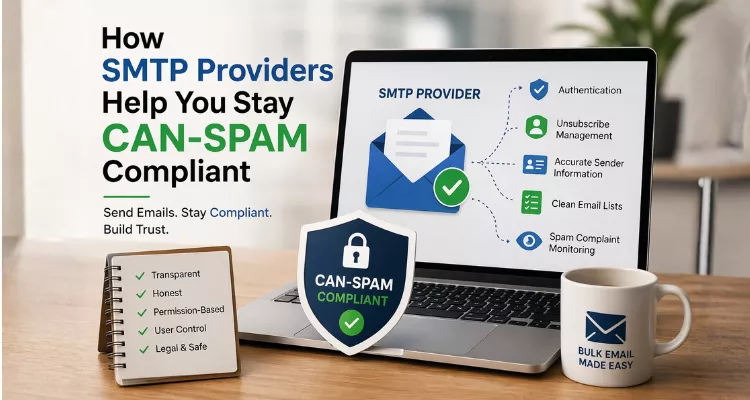
How SMTP Providers Help You Stay CAN-SPAM Compliant
1. Automated Unsubscribe Management
SMTP server providers integrate unsubscribe mechanisms directly into emails, ensuring compliance with opt-out requirements.
- Adds unsubscribe links automatically
- Tracks user preferences
- Maintains suppression lists
- Prevents sending emails to unsubscribed users
This ensures your business follows one of the most critical aspects of CAN-SPAM compliance.
2. Sender Authentication and Transparency
SMTP providers help maintain accurate sender identity through:
- SPF (Sender Policy Framework)
- DKIM (DomainKeys Identified Mail)
- DMARC authentication
These technologies ensure that your emails are:
- Verified
- Authentic
- Trustworthy
This directly supports SMTP server compliance and prevents spoofing or phishing.
3. Email Header and Content Compliance
SMTP providers enforce proper email formatting, including:
- Accurate header information
- Valid sender details
- Correct routing paths
This ensures compliance with regulations that prohibit misleading email headers.
4. Opt-Out Processing Automation
One of the most important compliance rules is honoring unsubscribe requests within 10 days.
SMTP providers:
- Automatically process unsubscribe requests
- Update suppression lists in real-time
- Prevent accidental re-sending
This eliminates human error and ensures consistent compliance.
5. Physical Address Inclusion
Most SMTP relay service providers include features that allow businesses to automatically append:
- Business address
- Contact details
- Footer compliance information
This ensures every email meets legal requirements.
6. List Hygiene and Email Filtering
SMTP providers help maintain clean email lists by:
- Removing invalid email addresses
- Filtering spam traps
- Preventing duplicate contacts
This improves:
- Deliverability
- Compliance
- Engagement rates
7. Spam Detection and Content Monitoring
SMTP providers use advanced filters to detect:
- Spammy keywords
- Misleading subject lines
- Poor formatting
This helps businesses align with bulk email CAN-SPAM rules and avoid spam folders.
8. Compliance Reporting and Analytics
Modern SMTP providers offer detailed reporting such as:
- Bounce rates
- Spam complaints
- Unsubscribe rates
- Engagement metrics
These insights help businesses monitor and improve compliance strategies.
9. Permission-Based Email Sending
While CAN-SPAM does not strictly require prior consent, best practices suggest using permission-based lists.
SMTP providers support this by:
- Managing opt-in forms
- Tracking consent records
- Preventing unauthorized email sending
10. Preventing Blacklisting
SMTP providers monitor sender reputation to avoid:
- IP blacklisting
- Domain penalties
- Spam classification
This ensures long-term compliance and better email performance.
SMTP Server Compliance: Technical Perspective
SMTP server compliance focuses on aligning your email infrastructure with both legal requirements and deliverability standards. It ensures that emails are sent through a secure, verified, and well-managed system that meets the expectations of mailbox providers and regulations like the CAN-SPAM Act of 2003. Without proper technical compliance, even well-crafted emails can fail to reach the inbox or may be flagged as spam.
Key Elements Include:
- Secure Email Authentication
Implementing protocols like SPF, DKIM, and DMARC helps verify sender identity and prevents spoofing or phishing attempts. - Dedicated IP Reputation Management
Using a dedicated IP allows better control over sender reputation, ensuring consistent email performance and trustworthiness. - Email Throttling and Rate Limits
Controlling the speed and volume of email sending helps avoid spam filters and maintains server stability. - Spam Complaint Monitoring
Tracking user complaints enables quick action, reducing risks of blacklisting and improving compliance. - Bounce Handling Systems
Automatically managing hard and soft bounces keeps email lists clean and improves deliverability.
These technical elements work together to ensure your emails remain compliant, reliable, and trusted by email servers.
Common Mistakes That Break CAN-SPAM Compliance
Even experienced marketers can unintentionally violate CAN-SPAM compliance when running email campaigns at scale. Small oversights, like missing key details or using aggressive marketing tactics, can quickly turn into serious compliance issues. The CAN-SPAM Act of 2003 requires businesses to maintain transparency, accuracy, and user control at all times. Ignoring these principles not only increases the risk of legal penalties but also harms email deliverability and brand reputation. In many cases, these mistakes happen due to lack of awareness, poor list management, or over-optimization for clicks instead of compliance.
Avoid These Common Errors:
- Missing Unsubscribe Links
Not providing a clear opt-out option violates a core requirement and frustrates users. - Misleading Subject Lines
Clickbait or false promises may increase opens temporarily but damage trust and break compliance rules. - Incorrect Sender Details
Using fake names or unclear sender identities makes emails look suspicious and reduces credibility. - Not Honoring Opt-Out Requests
Continuing to send emails after a user unsubscribes is a major violation and can lead to complaints. - Sending Emails to Purchased Lists
These lists often contain unverified users, increasing spam reports and legal risks. - Hiding Business Identity
Not including company details or a physical address reduces transparency and violates compliance guidelines. - Overloading Users with Emails
Sending too many emails can lead to spam complaints and damage your sender reputation.
These mistakes can lead to penalties, blacklisting, and poor email performance if not addressed properly.
Marketing Emails vs Transactional Emails
Understanding the difference between marketing and transactional emails is essential for maintaining proper CAN-SPAM compliance. The CAN-SPAM Act of 2003 treats these two categories differently based on their purpose. Misclassifying an email can lead to compliance issues, so businesses must clearly define the intent of each message before sending it.
Marketing emails are designed to promote products, services, or brand awareness, while transactional emails are sent in response to a user’s action. Even though transactional emails have fewer requirements, they must still follow certain rules to remain compliant and trustworthy.
Marketing Emails
Marketing emails are primarily promotional and aim to drive engagement, sales, or brand visibility. Because they are commercial in nature, they must strictly follow all CAN-SPAM compliance rules.
Key characteristics of marketing emails:
- Focused on promotions, offers, or brand messaging
- Sent to a broad or targeted audience for engagement
- Must include a clear and visible unsubscribe option
- Must contain accurate sender details and a valid physical address
- Subject lines must not be misleading
- Must clearly indicate that the message is promotional
Examples:
- Discount offers and sales campaigns
- Product launches
- Newsletter promotions
- Event or webinar invitations
Transactional Emails
Transactional emails are triggered by a user’s action and are meant to provide important information rather than promote a product. These emails are considered functional and are not primarily commercial.
Key characteristics of transactional emails:
- Sent after a user interaction or request
- Focused on delivering necessary information
- Do not require an unsubscribe link (if purely transactional)
- Must include accurate sender identification
- Should not contain misleading or promotional content
Examples:
- Order confirmations
- Payment receipts
- Shipping updates
- Password reset emails
Benefits of Using SMTP Providers for CAN-SPAM Compliance
Using reliable SMTP server providers plays a crucial role in maintaining CAN-SPAM compliance while improving overall email marketing performance. These providers are not just delivery tools, they act as compliance enablers that help businesses align with regulations like the CAN-SPAM Act of 2003. By integrating technical safeguards, automation, and monitoring systems, SMTP providers reduce risks and ensure that your campaigns remain both effective and legally secure.
1. Legal Protection
SMTP providers help ensure that every email you send meets required legal standards. From including unsubscribe links to maintaining accurate sender information, they minimize the chances of violations and protect your business from costly penalties.
2. Better Deliverability
Compliant emails are trusted more by email service providers like Gmail and Outlook. SMTP providers optimize sending practices, authentication, and list hygiene, increasing the chances that your emails land in the inbox instead of spam folders.
3. Improved Trust
When emails are transparent, properly structured, and easy to unsubscribe from, users feel more comfortable engaging with your brand. SMTP providers ensure consistency in communication, helping build long-term credibility.
4. Higher Engagement
Clean, compliant email campaigns result in better open rates, click-through rates, and conversions. By avoiding spam triggers and maintaining list quality, SMTP providers help improve overall campaign performance.
5. Automation and Efficiency
SMTP providers automate key compliance tasks such as unsubscribe management, bounce handling, and list updates. This reduces manual effort, prevents human errors, and allows businesses to focus more on strategy and growth.
6. Stronger Sender Reputation
By maintaining proper sending practices and monitoring spam complaints, SMTP providers help protect your domain and IP reputation, which is essential for long-term email success.
7. Scalable and Consistent Performance
As your email volume grows, SMTP providers ensure compliance is maintained at scale without compromising speed, reliability, or accuracy.
Best Practices for SMTP Providers Email Compliance
To ensure strong SMTP providers email compliance, businesses need to combine the right technology with disciplined email marketing practices. While SMTP providers offer built-in compliance tools, your strategy and execution play an equally important role. Following best practices aligned with the CAN-SPAM Act of 2003 helps maintain deliverability, protect your sender reputation, and build long-term trust with your audience.
1. Use Verified Email Lists
Always work with permission-based and verified email lists. Avoid buying or scraping email databases, as these often contain invalid or uninterested users. Verified lists reduce bounce rates, spam complaints, and compliance risks while improving engagement quality.
2. Maintain Transparency
Be clear and honest about who you are and why you’re contacting the recipient. Use recognizable sender names, accurate email addresses, and include proper company details. Transparency builds credibility and ensures users don’t feel misled or confused.
3. Use Double Opt-In
Double opt-in requires users to confirm their subscription through a verification email. This ensures that only genuinely interested users are added to your list, reducing spam complaints and improving overall campaign performance.
4. Monitor Campaign Performance
Regularly track key metrics such as open rates, click-through rates, bounce rates, and spam complaints. Monitoring performance helps identify issues early and allows you to adjust your strategy for better compliance and results.
5. Regularly Clean Email Lists
Remove inactive subscribers, invalid email addresses, and hard bounces from your database. A clean list improves deliverability, maintains sender reputation, and ensures compliance with email marketing standards.
6. Use Trusted SMTP Providers
Choose SMTP providers that offer strong compliance features such as authentication protocols, suppression list management, and real-time analytics. A reliable provider helps automate compliance and ensures consistent email performance.
7. Maintain Consistent Sending Patterns
Avoid sudden spikes in email volume. Gradual and consistent sending builds trust with email servers and reduces the chances of being flagged as spam.
8. Optimize Email Content
Ensure your email content is relevant, clear, and free from spam-triggering language. Well-structured and valuable content improves engagement and keeps your campaigns compliant.
Why Businesses Must Prioritize CAN-SPAM Compliance
CAN-SPAM compliance is no longer a secondary consideration, it is a core requirement for any business using email marketing. With stricter regulations and smarter spam filters, companies must ensure their email practices align with legal standards such as the CAN-SPAM Act of 2003. Compliance not only protects businesses from penalties but also strengthens long-term marketing performance. Ignoring these rules can quickly lead to blocked campaigns, damaged credibility, and lost opportunities.
Why Compliance Is Essential
- Sustainable Email Marketing
Following compliance ensures your campaigns remain effective over time without interruptions from spam filters or blacklisting. - Protects Brand Reputation
Transparent and ethical emails build a positive image, while misleading communication can harm your brand identity. - Ensures Legal Safety
Compliance helps avoid heavy fines and legal complications that can arise from violating email marketing laws. - Builds Customer Trust
When users know they can trust your emails, they are more likely to engage, respond, and stay connected with your brand. - Improves Deliverability
Email providers favor compliant senders, increasing the chances of your emails reaching the inbox instead of spam. - Supports Long-Term Growth
Ethical practices create a strong foundation for consistent engagement and scalable marketing success.
Conclusion
Businesses that prioritize compliance not only avoid legal risks but also create a foundation for sustainable and trustworthy communication. The CAN-SPAM Act of 2003 has made it clear that transparency, honesty, and user control are essential for any email strategy to succeed.
From managing unsubscribe requests and maintaining clean email lists to implementing authentication protocols and monitoring performance, they ensure that every email sent meets both legal and deliverability standards.
By choosing the right SMTP provider and following proven best practices, businesses can:
- Stay fully compliant with CAN-SPAM regulations
- Avoid costly penalties and legal issues
- Improve inbox placement and campaign performance
- Build long-term trust and credibility with their audience
Ultimately, compliance is not just a requirement, it’s a competitive advantage. Businesses that embrace it are better positioned to achieve consistent engagement, stronger relationships, and long-term email marketing success.
FAQ
CAN-SPAM compliance means following the rules set by the CAN-SPAM Act of 2003 to ensure emails are transparent, honest, and give users control over communication.
Any business sending commercial or promotional emails to users, especially in the U.S., must follow CAN-SPAM compliance rules, even if they are located in another country.
CAN-SPAM does not strictly require prior permission, but using permission-based (opt-in) lists is strongly recommended for better compliance and performance.
You must include accurate sender details, honest subject lines, a valid physical address, and an easy unsubscribe option, while avoiding misleading content.
SMTP providers automate compliance features like unsubscribe management, authentication, list cleaning, and monitoring to ensure emails meet legal standards.
Violations can result in heavy fines, email blacklisting, reduced deliverability, and damage to your brand reputation.
Yes, but with fewer requirements. They must include accurate sender information but typically do not require an unsubscribe link unless they contain promotional content.
Marketing emails promote products or services, while transactional emails are triggered by user actions like order confirmations or password resets.
It gives users control over communication and is a mandatory requirement under CAN-SPAM compliance for marketing emails.
No, using purchased lists increases spam complaints, reduces deliverability, and can lead to compliance violations.